
DisCo Conference

Workshops 2026

TRANSFORMING STATIC EDUCATIONAL MATERIALS INTO INTERACTIVE AR EXPERIENCES

  • Lectors: Maria Gutu, Ph.D., URSU Adriana, Technical University of Moldova
  • Time: 16:40 – 17:40 hod.
  • Room: Jihlava

This hands-on workshop introduces participants to the use of augmented reality (AR) to create interactive educational experiences with accessible no-code tools. During the session, participants will learn how to transform static educational materials such as posters, illustrations, worksheets, or printed images into dynamic AR experiences that can be viewed and explored using mobile devices.
The workshop combines creativity and educational innovation through practical activities focused on designing and testing AR-enhanced learning materials. Participants will create their own interactive AR project by pairing visual content with animations or videos, and test the final result via smartphone-based AR scanning.
No prior programming experience is required. Participants are encouraged to bring a laptop for content creation and a smartphone for testing and scanning AR experiences during the workshop. The session is designed for educators, researchers, students, and anyone interested in interactive and technology-enhanced learning.

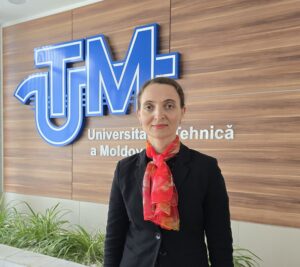
Maria Gutu, Ph.D., Technical University of Moldova
Maria Gutu is a university lecturer at the Technical University of Moldova and a researcher in educational technologies and digital learning environments. She specialises in integrating emerging technologies into education, including augmented reality, artificial intelligence, flipped classroom methodology, and STEAM-based educational approaches.
As a holder of the Digital Ambassador title, Maria actively promotes innovative and student-centred teaching practices and mentors students in the design and development of educational technologies and interactive learning experiences. Her research interests focus on competency-based education, immersive technologies, and the transformation of traditional educational processes through digital innovation.”

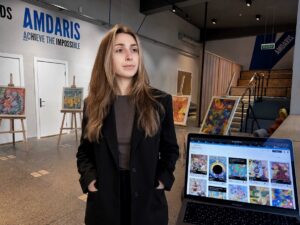
URSU Adriana, Technical University of Moldova

”Ursu Adriana is a PhD student and university assistant at the Technical University of Moldova, specialising in augmented reality technologies and immersive educational environments. Her academic and research activities focus on integrating augmented reality into education and developing interactive digital learning experiences. She is actively involved in educational and technological projects that promote innovative teaching approaches through immersive technologies.

During the workshop, Adriana will demonstrate the process of creating an interactive augmented reality experience using the ARTIVIVE platform and will guide participants through the practical stages of AR content development for educational and creative applications.”

Integrating Immersive Digital Twins in Higher Education and VET

  • Lectors: Dr. Cristina Obae, NEdHo (New Education Horizons), Romania

  • Time: 11:30 – 12:40 hod.
  • Room: Moravia

What if your students could step inside a machine, explore a smart factory in real time, or experiment with complex systems without real-world risks or costs?
This highly interactive workshop invites university and VET educators to discover how immersive digital twins (IDTs) can make teaching more engaging, experiential, and future-oriented in the age of Industry 4.0. As industries rapidly transform through automation, AI, and predictive technologies, educators are challenged to rethink how students learn about increasingly complex systems and processes.
Building on the ongoing IDT4EU project, the workshop introduces participants to innovative ways of using immersive digital twins to create active, hands-on learning experiences. Through real-life examples and collaborative experimentation, participants will explore how immersive environments can support problem-solving, curiosity, teamwork, and deeper understanding of theory through practice.
Rooted in Finnish experiential learning pedagogy, the session focuses on learning by doing. Participants will test ideas, reflect together, and imagine how immersive digital twins could be adapted to their own teaching contexts.
This workshop is designed for educators, trainers, researchers, and instructional designers who are curious about innovative teaching practices and want practical inspiration for bringing immersive learning into their classrooms. Participants will leave with concrete pedagogical ideas, creative activity concepts, and a fresh perspective on how immersive technologies can transform student engagement and learning. 

Dr. Cristina Obae, NEdHo (New Education Horizons), Romania

Dr. Cristina Obae is AI and Virtual Worlds advisor at NEdHo (New Education Horizons), involved in new technologies-based learning environments research at the University of Lapland. With more than 20 years’ experience in education, she is an active Digital Education Ambassador, involved in multiple innovative EU projects, has lead the Hybrid Learning Squad and has been invited as expert in all of the European Digital Education Hub Squads on AI, Future classrooms, Sustainability, Immersive Learning and Futuring.

Digital Education in 2040: Exploring Plausible Futures

  • Lecture: Jan Beseda, Ph.D., Centre for Higher Education Studies
  • Time: 26. 6. 2025, 11:30 – 12:30
  • Room: Morava

This interactive 60-minute workshop will delve into the multifaceted landscape of digital education in 2040, drawing insights from recent futuring studies and scenario archetypes. Participants will explore the forces shaping the future of learning, including technological advancements, societal shifts, and potential constraints. We will examine four plausible scenarios for digital education – Growth, Constraint, Decline, and Transformation – to understand their implications for learners, educators, and institutions. Through guided discussion and collaborative activities, attendees will:


    • Gain an understanding of “futuring” concepts: Learn how to use foresight methods to anticipate and prepare for emerging trends in digital education.
    • Identify key trends and “game changers”: Discover the 16 highly relevant and impactful trends identified through horizon scanning that could significantly influence education by 2040, such as the emergence of GenAI, advancements in XR, and the rising need for new skills in the labor market.
    • Explore Dator’s Four Futures: Analyze different future scenarios for digital education, from “Empowered Learning” with AI-powered personalization and lifelong learning to a “Disciplined and Rational Education” shaped by increased regulation and sustainability efforts. We will also touch upon the “Decline/Collapse” scenario, considering risks like widespread AI-driven fraud and digital inequality , and a “Transformative Vision” emphasizing human-centered learning and ethical technology integration.
    • Discuss implications and opportunities: Reflect on the potential challenges and opportunities presented by each scenario, fostering critical thinking about the proactive steps needed to shape a desirable future for digital education.

Jan Beseda, Ph.D., Centre for Higher Education Studies

Jan Beseda, Ph.D., is a senior researcher at the Centre for Higher Education Studies and holds the position of Head of the National Centre for Distance Education. Additionally, Jan serves as the Director of the Czech Association of Professional Tertiary Education. His primary areas of expertise include leveraging ICT in education, ensuring quality in higher education, and fostering competency development. Jan is also renowned for his role as the primary organizer of the international DisCo conference, focusing on the integration of ICT in education. Furthermore, he actively participates in several influential working groups, such as EURASHE Quality Assurance Community of Practice, and has been involved in numerous international projects. He was active member of European Digital Educations Squads: Futuring Education, Safety and Security.